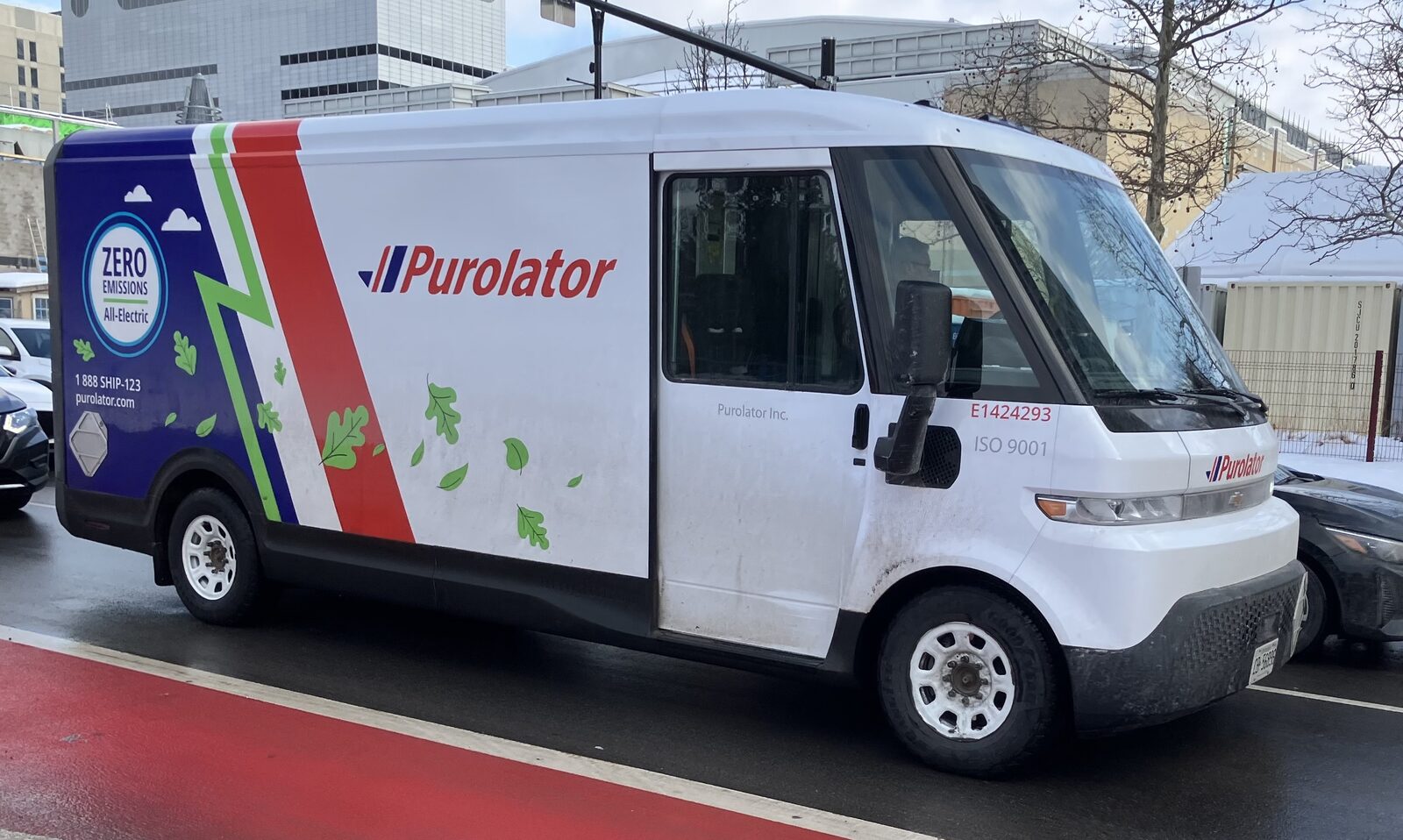
Purolator alternatives

Why Consider Purolator Alternatives?

Let's start with the truth: Purolator is an excellent carrier. It reaches 100% of all Canadian postal codes, handles over 250 million+ packages annually, and was rated the top-performing carrier for on-time delivery in Canada by ShipMatrix Inc. in September 2024 — outperforming both FedEx Canada and UPS Canada. With 1,290 locations across Canada and a fleet that uses 97% of its own assets, Purolator has the operational depth that comes from six decades of building infrastructure across this country.

So why would a smart shipper look at alternatives? Because no single carrier is the cheapest, fastest, or most convenient option for every shipment. The shipping landscape in Canada is competitive, and the carrier that wins your Toronto-to-Vancouver ground shipment may not be the best choice for your Montreal-to-New York express package or your 2 lb residential delivery to rural Nova Scotia. Here are the specific reasons businesses compare Purolator against its competitors.

Cost Optimization Across Different Package Profiles

Carrier pricing is not one-size-fits-all. Each carrier has different rate structures, different dimensional weight divisors, different surcharge schedules, and different discount tiers. A 25 lb box shipping ground from Calgary to Winnipeg might be cheapest on Purolator. That same box going from Ottawa to a residential address in Moncton might be cheaper on Canada Post because Canada Post doesn't charge a residential surcharge on most services — while Purolator charges approximately $4.50–$6.00 per residential delivery. The only way to know which carrier wins for a specific shipment is to compare them side by side, every time.

Rate increases compound this issue. Purolator announced an average 5.7% rate increase effective September 1, 2025, for the 2025–2026 rate year. Every carrier adjusts annually, and those increases don't move in lockstep. After each rate cycle, the competitive landscape shifts — what was cheapest last quarter may not be cheapest this quarter. Businesses that routinely compare carriers after rate adjustments consistently pay less than those that default to one carrier year after year.

International Shipping — Stronger Global Networks Exist

Purolator reaches 210+ countries through its Express International service, which is solid for a Canadian-focused carrier. But Purolator's international network relies heavily on partnerships and alliances rather than wholly owned infrastructure abroad. That matters when you need granular tracking, customs clearance speed, or guaranteed delivery windows to specific international destinations.

FedEx and UPS each serve 220+ countries and territories through networks they own and operate end-to-end. FedEx built its business on international express delivery and owns its global air fleet. UPS operates the world's largest package delivery network with its own customs brokerage infrastructure. For businesses that regularly ship to the United States, Europe, or Asia, these carriers can offer tighter delivery windows, more direct routing, and more predictable customs clearance because they control the full chain from pickup to delivery.

Service-Specific Needs That Purolator Can't Always Meet

Some shipments have requirements that fall outside Purolator's service model entirely. Canada Post is the only major carrier that delivers to PO box addresses — Purolator, UPS, FedEx, GLS, and Canpar all require a physical street address. Canada Post also operates 6,200+ post offices across Canada, including in remote and rural communities where courier access points are sparse. For residential deliveries in those areas, Canada Post often has faster ground service simply because its last-mile infrastructure is already in place.

UPS My Choice gives recipients granular control over delivery timing and location — a feature that reduces failed delivery attempts and is popular with e-commerce customers who want to reroute packages to a neighbour, hold them at a UPS Access Point, or reschedule delivery. These recipient-facing features matter if your business competes on delivery experience.

The Bottom Line

The smartest approach isn't to abandon Purolator — it's to stop treating carrier selection as a one-time decision. The businesses that save the most on shipping are the ones that compare all available carriers for every shipment and pick the best option each time. That's the approach this guide is built around.


Top Purolator Alternatives in Canada

Here's a practical comparison of every major carrier available to Canadian businesses. This is not a ranking — each carrier has genuine strengths depending on what you're shipping, where it's going, and how fast it needs to get there. The table below captures the key differentiators at a glance, followed by detailed context on each.

CarrierStrengthsBest ForCanadian CoverageInternational Reach
FedExGlobal express leader, owned international air fleet, advanced customs clearance, strong US cross-border infrastructureInternational and US-bound shipments, express delivery, time-critical cross-borderVery good — strong in urban centres and growing ground network220+ countries and territories
UPSLargest global package network, strong B2B delivery, UPS My Choice recipient control, robust trackingHeavy shipments, US-bound freight, B2B commercial deliveries, international logisticsExcellent — comprehensive commercial address coverage220+ countries and territories
Canada PostOnly carrier reaching PO boxes, no residential surcharge on most services, 6,200+ post offices, statutory obligation to every addressLightweight packages under 5 lbs, residential deliveries, PO box addresses, rural and remote areasEvery Canadian address including PO boxes and remote communities190+ countries
GLS CanadaCompetitive ground rates, growing domestic network, own ground infrastructure, strong in Ontario and QuebecNon-urgent B2B ground shipments, regional economy shipping, cost-sensitive domestic groundGood and expanding — strongest in Central and Western CanadaLimited — primarily a domestic ground carrier
Canpar (TFI International)Strong regional pricing, backed by TFI International infrastructure, competitive in Central CanadaEconomy ground, regional shipments, high-volume Central Canada groundGood — strongest density in Ontario and QuebecLimited — focused on domestic Canadian market
Loomis ExpressCanadian-owned, strong Western Canada presence, competitive express and ground rates in select marketsWestern Canada shipments, businesses wanting a Canadian-owned alternativeGood — strongest coverage in Western provincesLimited — primarily domestic with some US capabilities

FedEx — The International Express Specialist

FedEx was built from the ground up as an express delivery company, and that DNA still shows in its service offerings. For shipments crossing the Canada–US border, FedEx has some of the most refined customs clearance processes of any carrier — important when your customer is waiting for a shipment that could get held up at customs. FedEx International Priority is widely considered the industry benchmark for next-business-day delivery between major North American cities.

Within Canada, FedEx Ground has become a genuine competitor since FedEx expanded its Canadian ground network. FedEx also offers Saturday delivery and evening delivery windows in select Canadian markets — options that aren't universally available from Purolator. The trade-off is that FedEx's Canadian domestic network, while strong, doesn't match Purolator's depth in rural and remote areas. FedEx's fuel surcharge tends to run higher than Purolator's — approximately 29.5% for express services as of early 2026, compared to Purolator's 23.5% — but base rates on specific lanes can still make FedEx the cheaper total-cost option.

UPS — The Global Logistics Heavyweight

UPS operates the world's largest package delivery company by revenue, with a network spanning 220+ countries and territories — all through infrastructure it owns and operates, not through partnerships. In Canada, UPS has deep commercial address coverage and is particularly strong for B2B deliveries where packages go to loading docks and commercial receiving areas rather than front porches.

What genuinely differentiates UPS is UPS My Choice, which gives recipients control over their deliveries — rerouting, rescheduling, holding at a UPS Access Point, or authorizing release without a signature. For e-commerce businesses, this reduces failed delivery attempts and improves customer satisfaction. UPS also offers a money-back guarantee on its time-definite services, matching Purolator's service guarantee on domestic shipments. Like FedEx, UPS's fuel surcharge (approximately 29.5% for domestic express as of early 2026) runs higher than Purolator's, but UPS often compensates with competitive base rates on US-bound ground and heavy shipments.

Canada Post — The Universal Reach Carrier

Canada Post occupies a unique position in the Canadian shipping landscape. As a Crown corporation with a statutory obligation to provide postal service to every Canadian address, it reaches places no other carrier can — including PO boxes, rural route addresses, and remote northern communities. With 6,200+ post offices spread across the country, Canada Post has last-mile infrastructure in communities where Purolator, UPS, and FedEx have no physical presence.

For lightweight packages — particularly those under 5 lbs going to residential addresses — Canada Post is often the cheapest option. The reason is structural: Canada Post does not charge a residential surcharge on most of its parcel services. Purolator charges approximately $4.50–$6.00 per residential delivery, and FedEx and UPS have similar surcharges. On a high volume of lightweight residential shipments, that surcharge difference alone can make Canada Post significantly cheaper. Canada Post also offers flat-rate shipping boxes that provide predictable pricing for products that fit standard dimensions.

The trade-off with Canada Post is speed and tracking granularity. Canada Post's transit times are generally longer than Purolator's, particularly for express services, and its tracking updates are less frequent and less detailed. For time-sensitive or high-value shipments where tracking visibility matters, Purolator or one of the courier carriers will give you a better experience.

GLS Canada — The Economy Ground Contender

GLS Canada — formerly Dicom Express before being acquired by GLS Group (a subsidiary of Royal Mail) — is one of the fastest-growing carrier networks in Canada. GLS operates its own ground network rather than relying on linehaul partnerships, which gives it competitive pricing particularly for business-to-business ground shipments in Ontario, Quebec, and the major western Canadian markets.

GLS is not a household name for consumers, but among logistics managers at mid-size companies, it's a well-known option for reducing ground shipping costs on domestic lanes. Its international coverage is limited compared to Purolator, UPS, or FedEx, so GLS is best evaluated as a domestic ground alternative rather than an all-purpose carrier replacement. For businesses with high volumes of same-province or regional ground shipments, GLS is worth quoting alongside Purolator Ground — the per-package savings can compound meaningfully at scale.

Canpar — Regional Value With National Infrastructure

Canpar is owned by TFI International, one of Canada's largest transportation and logistics companies, which means it has real infrastructure and financial stability behind it. Canpar has traditionally been strongest in Central Canada — particularly Ontario — where its density of facilities gives it competitive transit times and pricing for ground shipments.

Like GLS, Canpar competes primarily on price for domestic ground shipments rather than on speed or international reach. It's a practical option for high-volume shippers in Central Canada looking to reduce per-package ground costs without sacrificing reliability. Canpar is not the right choice for shipments to remote areas or for time-definite express requirements — for those scenarios, Purolator, UPS, or FedEx will serve you better.

Loomis Express — The Western Canada Specialist

Loomis Express is a Canadian-owned carrier with a particularly strong presence in Western Canada — British Columbia, Alberta, Saskatchewan, and Manitoba. For businesses based in or shipping heavily to western provinces, Loomis offers competitive express and ground rates that are worth comparing against the national carriers. Loomis operates its own fleet and facilities in its core markets, which gives it reliable transit times within its strongest coverage areas.

Loomis's national coverage is less comprehensive than Purolator's, and its international capabilities are limited. But for businesses with a western Canadian shipping profile, Loomis can be a genuine cost-effective alternative for a portion of their shipment volume — particularly for ground and economy express services within the western provinces.

Purolator pricing comparison

How Purolator's Pricing Compares

Pricing is the most common reason businesses look for Purolator alternatives — and it's also the area where generalizations are least useful. Carrier pricing depends on so many variables (weight, dimensions, origin, destination, service level, account discounts, surcharges) that any blanket statement like "FedEx is cheaper than Purolator" or "Canada Post always wins on price" is misleading. The only honest answer is: it depends on the shipment.

That said, there are structural pricing differences between carriers that are worth understanding because they influence which carrier tends to win for different shipment profiles.

Base Rates and Annual Increases

Purolator's 2025–2026 rate year brought an average 5.7% increase effective September 1, 2025. Every major carrier adjusts rates annually, typically in the range of 4–7%. These increases don't happen on the same dates or by the same percentages, which means the competitive landscape shifts with every rate cycle. A lane where Purolator was cheapest in August 2025 might be cheaper on FedEx or UPS after Purolator's September increase, depending on when those carriers adjusted their own rates.

Published rate cards are also just a starting point. The rate you actually pay depends on your discount tier — which is based on volume. Businesses with direct carrier accounts negotiate their own discounts, while businesses using a third-party platform like Secureship benefit from the platform's collective volume. Either way, the published rate is rarely what you pay.

Fuel Surcharges — A Meaningful Differentiator

Fuel surcharges are applied as a percentage of the base transportation rate on every shipment, and they vary significantly between carriers. As of February 2026:

  • Purolator: 23.5% courier fuel surcharge (set monthly based on the 4-week average gasoline price from Natural Resources Canada)
  • FedEx: Approximately 29.5% for express services (set weekly based on the US DOE national average for jet fuel and diesel)
  • UPS: Approximately 29.5% for domestic services (set weekly based on the US DOE national average)

Purolator's lower fuel surcharge percentage is a genuine pricing advantage on base-rate comparisons. On a $50 base rate, the fuel surcharge difference between Purolator (23.5%) and FedEx or UPS (~29.5%) is $3.00 per shipment. At 500 shipments per month, that's $1,500 per month in fuel surcharge savings alone — assuming base rates are identical, which they rarely are. The point is that fuel surcharges are a real factor in total cost and Purolator has a structural advantage here.

Residential Surcharges and Where Canada Post Wins

Purolator, FedEx, and UPS all charge residential delivery surcharges — typically $4.50–$6.00+ per package. Canada Post does not charge a residential surcharge on most parcel services. For businesses that ship primarily to residential addresses (which describes most e-commerce), this structural difference means Canada Post starts every residential comparison with a built-in cost advantage. The heavier and more expensive the base rate, the less this matters proportionally. But for lightweight, lower-value shipments, the residential surcharge can represent 15–25% of the total shipping cost.

The Right Approach to Pricing

Rather than trying to guess which carrier is cheapest based on general rate structures, the most effective approach is to compare rates for your actual shipments. Enter your real package dimensions, real weight, real origin, and real destination into a rate comparison tool and see what each carrier actually charges. That's the only way to get a meaningful answer, because the interplay between base rates, dimensional weight, fuel surcharges, and delivery surcharges produces different winners on different routes.

The Multi-Carrier Advantage

The traditional approach to shipping is to pick one carrier, negotiate a rate, and send everything through that carrier. It's simple. It's also almost certainly costing you money. Here's why.

Every carrier has routes and shipment profiles where it excels — and others where it doesn't. Purolator is exceptional for domestic Canadian shipments, but it's not always the cheapest for cross-border. FedEx dominates on international express, but it's rarely the cheapest for a 3 lb residential delivery within the same province. Canada Post wins on lightweight residential packages, but it's not the right choice when you need guaranteed next-morning delivery to a business address.

The businesses that pay the least for shipping aren't the ones with the best rate from one carrier — they're the ones that use multiple carriers strategically, routing each shipment to whichever carrier offers the best combination of price, speed, and reliability for that specific package on that specific route.

This isn't theoretical. A business shipping 500 packages a month that routes each shipment to the cheapest available carrier — rather than sending everything through a single carrier — will consistently save 10–25% on total shipping costs. The savings come from three sources: different carriers winning on different routes, avoiding surcharges that some carriers charge but others don't, and leveraging competitive pressure to keep rates honest.

The practical challenge, of course, is that managing relationships with five or six different carriers is a logistical headache. Separate accounts, separate billing, separate tracking portals, separate label formats. That friction is exactly why most businesses default to a single carrier even when they know multi-carrier shipping would save them money. The solution is a platform that gives you access to all carriers through a single interface — which is exactly what Secureship provides.

See Which Carrier Wins for Your Shipment

Enter your package details and instantly compare rates from Purolator, FedEx, UPS, Canada Post, GLS, Canpar, and more. No account needed to get a quote.

Compare Shipping Rates

How Secureship Gives You Access to Every Alternative

Here's the practical problem with acting on the advice in this guide: comparing carriers manually is tedious. You'd need separate accounts with Purolator, FedEx, UPS, Canada Post, GLS, and Canpar. You'd need to log into each carrier's website or API, enter the same shipment details six times, and then compare the results in a spreadsheet. You'd manage six invoices, six tracking portals, and six sets of label formats. Nobody actually does this. Instead, most businesses pick one carrier and stick with it — leaving money on the table with every shipment that another carrier could have handled more cheaply.

Secureship is a multi-carrier shipping platform built to solve exactly this problem. With a single Secureship account, you get access to all major Canadian carriers — Purolator, FedEx, UPS, Canada Post, GLS, Canpar, and more. When you enter a shipment's details (origin, destination, weight, dimensions), Secureship returns real-time rates from every available carrier and service level in a single view. You pick the best option for that shipment, print your label, and you're done.

Group Buying Power — Better Rates Than You'd Get Alone

The other thing that changes when you ship through Secureship is pricing. Carrier discounts are volume-based — the more you ship, the better your rate. Most small and mid-size businesses don't ship enough individually to qualify for the deepest discounts from each carrier. Secureship aggregates shipping volume across all its customers and negotiates rates based on that collective volume. The result is that even a business shipping 20 packages a month gets access to pricing that would normally require shipping hundreds or thousands of packages monthly to unlock directly.

One Account, One Invoice, One Tracking Dashboard

Using multiple carriers through Secureship doesn't create administrative complexity — it eliminates it. You manage one account, receive one consolidated invoice, and track all your shipments (regardless of carrier) through one dashboard. You're not running six separate carrier relationships; Secureship handles those relationships on your behalf. From your perspective, it's as simple as shipping with a single carrier — but with the rates and flexibility of having access to all of them.

No Contracts, No Minimum Volumes, No Commitment

Secureship doesn't require minimum shipping volumes, long-term contracts, or volume commitments. You can ship one package or one thousand. You're not locked in, and you don't need to hit a volume threshold to access discounted rates. If Purolator is the best rate for a given shipment, Secureship will show you that and you'll use Purolator. If FedEx or Canada Post is cheaper, you'll see that too. The platform is carrier-agnostic — it simply shows you what's available and lets you choose.

Ready to Compare?

Create a free Secureship account and start comparing rates from every major Canadian carrier. See the difference on your very first shipment.

Get Your Free Estimate

When to Use Each Carrier Instead of Purolator

Rather than thinking about "replacing" Purolator, think about which carrier makes sense for which shipments. Here are the specific scenarios where each alternative carrier is worth evaluating.

Use FedEx When...

  • Shipping to the US frequently: FedEx has the strongest cross-border infrastructure and customs clearance processes for Canada-to-US shipments.
  • International express is critical: FedEx International Priority is the industry benchmark for time-definite international delivery.
  • You need Saturday or evening delivery: FedEx offers these windows in select Canadian markets where Purolator options may be limited.

Use UPS When...

  • Shipping heavy packages: UPS is competitive on heavier shipments and has strong pricing for palletized freight.
  • B2B is your primary profile: UPS excels at commercial address deliveries and avoids residential surcharges on business-addressed shipments.
  • Delivery experience matters: UPS My Choice gives recipients control that reduces failed delivery attempts.

Use Canada Post When...

  • Shipping lightweight packages under 5 lbs: Canada Post is often the cheapest option for light residential deliveries, with no residential surcharge.
  • Your customer has a PO box: Canada Post is the only carrier that delivers to PO box addresses. No exceptions.
  • Shipping to rural or remote areas: With 6,200+ post offices, Canada Post has the deepest last-mile network in remote communities.

Use GLS or Canpar When...

  • High-volume regional ground shipping: Both carriers offer competitive pricing on same-province and regional ground lanes, particularly in Ontario and Quebec.
  • Cost is the primary concern: For non-urgent B2B ground shipments, GLS and Canpar can undercut national carriers on specific routes.
  • You want to diversify carrier risk: Routing some volume through a second or third ground carrier provides backup capacity during peak seasons.

Use Loomis Express When...

  • Shipping within Western Canada: Loomis has its strongest coverage and most competitive rates in BC, Alberta, Saskatchewan, and Manitoba.
  • Supporting Canadian-owned carriers matters: Loomis is one of the few remaining Canadian-owned national courier companies.

Common Mistakes When Evaluating Purolator Alternatives

Switching carriers — or adding carriers to your shipping mix — is straightforward, but there are a few mistakes that trip up businesses regularly. Avoid these and you'll get the most out of a multi-carrier approach.

Comparing Base Rates Without Surcharges

A carrier can have a lower base rate but still cost more after fuel surcharges, residential fees, extended area charges, and dimensional weight adjustments. Always compare total landed cost — not just the base rate on the rate card. This is one of the advantages of using a platform like Secureship: the rates shown include fuel surcharges, so you're comparing apples to apples.

Ignoring Dimensional Weight Differences

Different carriers use different dimensional weight divisors for certain services. A package that's charged at actual weight by one carrier might be charged at dimensional weight by another. Always enter accurate dimensions — not just weight — when comparing rates. Skipping dimensions will give you misleading comparisons.

Basing a Decision on One Shipment

One quote doesn't tell the full story. A carrier might be cheapest for a 10 lb box from Toronto to Calgary but not for a 3 lb envelope from Vancouver to Montreal. If you're evaluating alternatives seriously, compare rates across a representative sample of your actual shipping profile — different weights, different origins and destinations, different service levels. The carrier that wins on average across your mix is more valuable than the carrier that wins on one specific lane.

Focusing Only on Price

Price matters, but so does reliability. Purolator's top ranking for on-time delivery performance (ShipMatrix, September 2024) isn't just a bragging point — it means fewer customer complaints, fewer re-ships, and fewer refund requests. A carrier that saves you $2 per shipment but delivers late 5% more often may end up costing you more in customer service time and lost goodwill than the per-package savings are worth. Consider the total cost of a delivery failure, not just the label cost.

More Purolator Guides

Purolator shipping in Canada

Purolator Guide
Shipping in Canada

Complete guide to Purolator services, rates, tracking, and how to save on every shipment.

Read more
Purolator shipping rates

Purolator Guide
Shipping Rates

How Purolator calculates your rate, what the fuel surcharge actually costs you, and what changed in the 2025-2026 rate year.

Read more
Holiday shipping schedule

Purolator Guide
Holiday Schedule 2026

Full 2026 holiday closure calendar, what happens to packages in transit, and Christmas shipping deadlines.

Read more
Package tracking and delivery

Purolator Guide
Package Tracking

How to track a Purolator shipment using your PIN number, what tracking statuses mean, and what to do if your package is delayed.

Read more
Purolator vs Canada Post

Purolator vs
Canada Post

Both are partially Crown-owned — but they serve very different shipping needs. Here is when each one wins.

Read more
Purolator vs FedEx

Purolator vs
FedEx

Domestic reach versus global network. We break down where each carrier has the edge and when to switch.

Read more
Purolator vs UPS

Purolator vs
UPS

Purolator offers 100% Canadian postal code coverage and unique evening delivery. But UPS has a larger international network.

Read more
Shipping surcharges and fees

Purolator Guide
Surcharges & Fees

Fuel surcharges, residential fees, extended area charges, and everything else that gets added to your base rate.

Read more
Purolator delivery services

Purolator Guide
Services Overview

A detailed breakdown of every Purolator service — weight limits, transit times, and which option is right for your shipment type.

Read more

Frequently Asked Questions about Purolator Alternatives

What is the cheapest alternative to Purolator?

The cheapest alternative depends on your shipment specifics. For lightweight packages under 5 lbs, Canada Post is typically the most affordable. For heavier ground shipments, GLS or Canpar often offer lower rates. The most effective approach is to compare all carriers using Secureship's rate comparison tool, which shows you rates from all major Canadian carriers side by side.


Is FedEx cheaper than Purolator?

It depends on the shipment. FedEx can be cheaper for international and cross-border shipments to the US, while Purolator is often more competitive for domestic Canadian shipments due to its extensive network and 100% postal code coverage. For the most accurate comparison, enter your shipment details into Secureship's shipping calculator to see real-time rates from both carriers.


Is UPS better than Purolator?

UPS has a larger global network and is generally stronger for international and US-bound shipments. Purolator has deeper Canadian coverage — reaching 100% of Canadian postal codes through its partnership with Canada Post — and offers unique time-definite options like evening delivery (5:30–9:00 PM). Compare both on Secureship to see which is best for your specific route.


Can I use multiple carriers instead of just Purolator?

Absolutely — and you should. Different carriers excel at different types of shipments. Using a multi-carrier platform like Secureship lets you compare rates from Purolator, FedEx, UPS, Canada Post, GLS, Canpar, and more from a single dashboard. You get the best rate for each shipment without maintaining separate accounts with each carrier.


Why would I look for Purolator alternatives?

Common reasons include: cost savings (other carriers may offer better rates for your specific shipments), international needs (FedEx and UPS have stronger global networks), service gaps (Purolator may not offer the fastest option for certain routes), and specialized services (some carriers offer features Purolator doesn't, like freight forwarding or specialized handling). Many businesses use multiple carriers to optimize for cost and speed on every shipment.


Sources

All data on this page is sourced from official Purolator documentation and third-party carrier research. Last updated: March 3, 2026.