



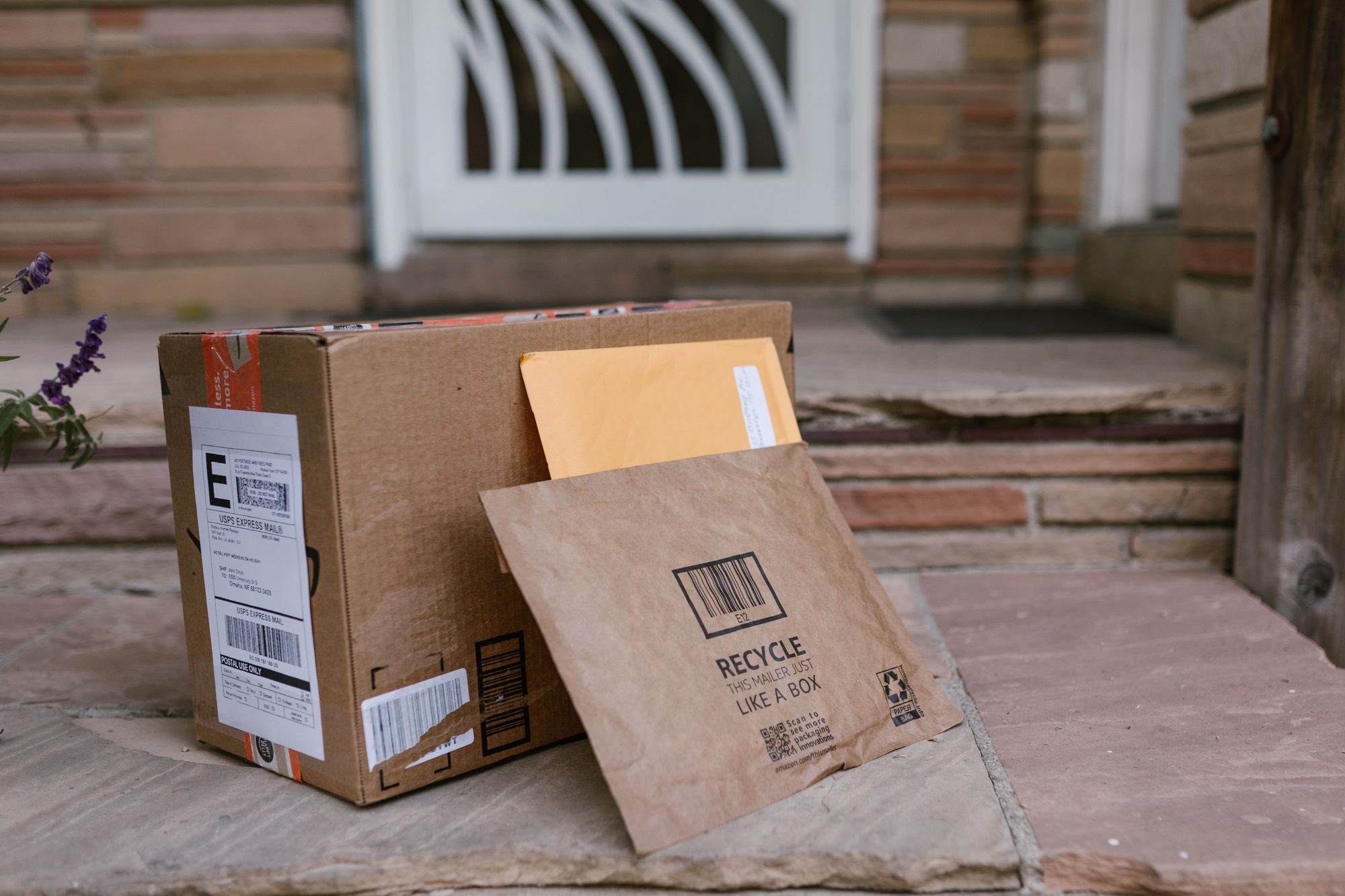
How Canada Post customs works

How Canada Post Customs Works

Duties and taxes on an international parcel are set by the destination country, not by Canada Post. For imports into Canada, the Canada Border Services Agency (CBSA) determines them. What Canada Post does is transmit the declaration you complete and, on inbound items, collect what the CBSA has assessed, plus a flat handling fee of its own. It does not set the rate and it cannot waive it.

3 rule sets origin, destination, and Canadian export
CBSA sets duty and tax, not Canada Post
Every parcel leaving Canada needs a declaration

This guide covers which customs form applies, what changes depending on whether a parcel is leaving or entering Canada, Canada Post's $9.95 handling fee, and who sets the duty. Canada Post organises customs into three separate rule sets, so this page follows the same split: a parcel that is perfectly legal to send from Canada can still be refused on arrival under the destination country's rules. For the shipping rate itself, see Canada Post Shipping Rates; for operational fees like fuel and oversized handling, see the Canada Post Surcharges & Fees guide instead.

Source: Canada Post: Customs requirements

Canada Post customs form

The Customs Form You Need

Canada Post states that you must complete a Customs Declaration CN22 or CN23, depending on the value of the item. But before you go looking for a form, check your service: on most services the shipping label already includes the customs declaration, so there is nothing separate to fill in and affix.

Service or declared valueForm or labelNotes
Any service, under CAD $500CN22 Customs Declaration (43-074-253)Used with the barcoded label produced at the post office or by your shipping system.
Any service, over CAD $500Customs Declaration 43-074-172Canada Post states you must complete and affix this declaration. It is also the International Parcel shipping label.
Xpresspost - USALabel 43-074-281, or 43-074-236Label 43-074-236 includes the customs declaration, so there is no separate form to affix.
Xpresspost - InternationalLabel 43-074-244Includes the customs declaration.
Expedited Parcel - USALabel 43-074-243Includes the customs declaration.
International Parcel (Air or Surface)Label 43-074-172Includes the customs declaration. Same form number as the over-$500 declaration above.
Tracked Packet and Small PacketLabel 43-074-253Includes the CN22 declaration. Over CAD $500 you must also complete and affix 43-074-172.

Two things are worth reading off that table. First, form 43-074-172 does double duty: it is the International Parcel shipping label, and it is also the declaration you complete and affix on any service once the declared value passes CAD $500. Second, on Tracked Packet and Small Packet the label includes a CN22, but above CAD $500 you have to add 43-074-172 on top of it rather than instead of it.

One honest gap: Canada Post says "CN22 or CN23, depending on the value" but never publishes the value at which CN23 replaces CN22, and it does not state that 43-074-172 is the CN23. The two are widely treated as the same thing. Since Canada Post does not say so, work from the declared-value rule in the table above and let its online customs form tool select the document for you.

The one CN23 use Canada Post does name has nothing to do with ordinary parcels: currency or monetary instruments worth CAD $10,000 or more mailed into Canada require Form E667 alongside a CN23.

Source: Canada Post: Required customs documentation

Sending a parcel out of Canada

Sending a Parcel Out of Canada

This is the direction most Canadian shippers care about, and the rules are shorter than the inbound ones. A customs form is required for every package you send outside Canada. Canada Post warns that false or incomplete information may result in the package being rejected by foreign customs authorities, so the contents description and declared value need to be specific. "Gift" or "sample" is not a description of contents.

Two mechanical details catch people out. On some services the declaration is built into the label rather than being a separate form: Xpresspost - USA shipping label 43-074-236 includes the customs declaration. And all International Parcel or Small Packet items travelling by air must bear the words "PAR AVION" in block lettering, which a shipping platform normally handles but a hand-prepared parcel will not.

Finally, remember what the clock does. Canada Post's delivery standards exclude time in customs, so a parcel held for inspection can arrive long after the published standard while still meeting it by definition. Our Canada Post Delivery Times guide has the published standards by service.

Source: Canada Post: Customs requirements

Receiving a parcel into Canada

Receiving a Parcel Into Canada

The charges below apply to items mailed into Canada. They do not apply to a parcel you send abroad, which is the distinction most guides blur.

$9.95 Canada Post handling fee, inbound dutiable item
Over $20 inbound value where CBSA collects tax
Pay online before delivery, via tracking or the app

Canada Post states that any item mailed into Canada is potentially subject to duty and taxes, with few exceptions. Items arrive through CBSA screening centres, where officers inspect and assess them. The CBSA collects provincial and harmonized sales taxes according to the province of residence on most taxable imports valued at over CAD $20. Canada Post lists items under CAD $20, gifts, and certain other categories as exemptions, though those thresholds are CBSA's to set rather than Canada Post's, so check CBSA's mail imports guidance for the current figures.

On top of whatever customs assesses, Canada Post charges its own handling fee of CAD $9.95 per dutiable or taxable mail item. This is the part worth comparing: the courier equivalent is a brokerage or entry-preparation fee billed on a scale that rises with declared value, whereas Canada Post charges a single flat amount regardless of value. On a low-value import that gap can exceed the shipping cost itself.

You can pay before the parcel arrives. Where an item is eligible, duties and taxes can be paid online through Canada Post tracking or the mobile app, and you receive an email confirmation with a number and barcode as proof of payment. If the parcel needs no signature, the delivery agent will then attempt delivery to your usual location. If you do not pay online, Canada Post collects the fees on the CBSA's behalf at delivery or pickup, which is a common reason a parcel turns into a notice card instead of a delivery.

Source: Canada Post: Customs requirements

Who sets duties and taxes

Who Sets Duties and Taxes

Not Canada Post. Duty and tax are set and assessed by the destination country's customs authority, which for parcels arriving in Canada is the Canada Border Services Agency. Canada Post transmits the declaration you complete and, on inbound items, collects what the CBSA has assessed. It does not decide the rate and it cannot waive it.

Canada Post is candid about the limits of its own guidance, and it is worth repeating. It states that the information is provided "as a convenience only", is "subject to change without notice", that it does "not guarantee its accuracy or completeness", and that "it's your responsibility to make sure that you are complying". Treat its customs pages, and this one, as orientation rather than a compliance check.

That is why no duty or tax percentage appears anywhere on this page. The amount depends on the destination country, the commodity, and its tariff classification, and it changes without reference to Canada Post. For an indication before you ship, use the CBSA's duty and taxes estimator for inbound items, and the destination country's customs authority for outbound ones.

Source: Canada Post: Customs requirements

Estimate duties before you ship

Estimate Duties Before You Ship

The best way to avoid a surprise at the border is to know your costs before you commit. Start with Secureship: compare live Canada Post rates against every major carrier in seconds, with no commercial account and no negotiation, so the shipping side of your cost is locked in. For the duties and taxes the CBSA adds on top, use the CBSA estimator alongside the form and fee rules above to see the full landed cost before you ship. You can also sign up free to save shipment details, though no account is needed just to compare.

Know Your Landed Cost Before You Ship

Compare live Canada Post rates against every major carrier, and see the shipping side of your cost in seconds. No account needed.

Get Estimate

Package Type
Units

More Canada Post Guides

Canada Post shipping in Canada

Canada Post Guide
Shipping in Canada

Complete guide to Canada Post parcel services, rates, delivery days, customs, and how to save on every shipment.

Read more
Canada Post parcel rates

Canada Post Guide
Shipping Rates

How Canada Post prices domestic and international parcels, including volumetric equivalent, plus how to get a live quote.

Read more
Canada Post parcel services

Canada Post Guide
Services Overview

Priority, Xpresspost, Expedited Parcel and Regular Parcel compared, including which tiers carry a guarantee.

Read more
Canada Post delivery times

Canada Post Guide
Delivery Times

Canada Post delivery standards by service, delivery hours, statutory holidays, and the weekend question answered.

Read more
Canada Post flat rate boxes

Canada Post Guide
Flat Rate Boxes

Canada Post flat rate boxes and prepaid packaging, the four sizes, and where prepaid labels are not accepted.

Read more
Canada Post surcharges and fees

Canada Post Guide
Surcharges & Fees

Fuel, oversized and out-of-spec surcharges explained, including the difference between the two size penalties.

Read more
Canada Post shipping alternatives

Canada Post Guide
Alternatives

When Canada Post is the right call, and when UPS, Purolator or FedEx fits your shipment better.

Read more
Canada Post vs FedEx

Canada Post vs
FedEx

Canada Post and FedEx compared on weight limits, weekend delivery, liability and surcharge structure.

Read more

Frequently Asked Questions About Canada Post Customs

Which Canada Post customs form do I need?

Often none, because the label already has it. On Xpresspost - USA (43-074-236), Xpresspost - International (43-074-244), Expedited Parcel - USA (43-074-243), International Parcel (43-074-172) and Tracked Packet or Small Packet (43-074-253), Canada Post states the shipping label includes the customs declaration. Where you do complete a separate form, it goes by declared value: the 43-074-253 CN22 for items worth less than CAD $500, and Customs Declaration 43-074-172 for items over CAD $500. On Tracked Packet and Small Packet above CAD $500 you affix 43-074-172 in addition to the CN22 already on the label, not instead of it.

Does every international parcel need a customs form?

Yes. A customs form is required for every package you send outside Canada. Canada Post warns that providing false or incomplete information may result in the package being rejected by foreign customs authorities, so the description and declared value need to be accurate and specific rather than vague. "Gift" or "sample" on its own is not a description of contents.

Does Canada Post set the duties and taxes on my parcel?

No. Duty and tax are set and assessed by the destination country's customs authority, and for parcels arriving in Canada that is the Canada Border Services Agency. Canada Post transmits your declaration and, on inbound items, collects what the CBSA assesses. The amount depends on destination, the commodity and its tariff classification, so no rate is published here. Canada Post is explicit that its own customs guidance is provided as a convenience only, is subject to change without notice, and that compliance is the shipper's responsibility.

What is the CAD $9.95 Canada Post handling fee?

It is Canada Post's own charge for processing an item that customs has assessed: "we apply a handling fee of CAN$9.95 per dutiable or taxable mail item." It applies to items mailed into Canada, not to parcels you send abroad. It is worth knowing how that compares: the courier equivalent is a brokerage or entry-preparation fee charged on a scale that rises with declared value, where Canada Post charges one flat amount. On a low-value import that difference can be larger than the shipping cost, so it is worth comparing the total rather than the headline rate.

Is there a value below which an inbound parcel is not taxed?

Canada Post states that the CBSA collects provincial and harmonized sales taxes according to the province of residence on most taxable imports valued at over CAD $20, and it lists mail items valued at less than CAD $20 as an exemption category, along with gifts and certain other exemptions. The thresholds and the gift allowance are CBSA rules rather than Canada Post rules, so check the CBSA for the current figures before relying on them.

Can I pay Canada Post duties and taxes online?

Yes, on eligible inbound items. You can pay online when you track the item or through the Canada Post mobile app, instead of paying at the door, and you get an email confirmation with a number and barcode as proof of payment. If the parcel does not need a signature, the delivery agent will then attempt delivery to your usual location and will respect a stated delivery preference. If you do not pay online, Canada Post collects the fees on behalf of the CBSA at the time of delivery or pickup, which is a common reason a parcel ends up as a notice card instead of a delivery.

Whose rules apply to an international parcel, mine or the destination's?

Both, and Canada Post says so plainly: all international mail is subject to the customs regulations and laws of both the country of origin and the country of destination. It splits this into three sets of requirements to check: fees and restrictions on items mailed into Canada, Canadian requirements and restrictions on what you mail out, and the destination country's own customs rules. A parcel that is legal to send can still be refused on arrival, which is why the destination country's rules are worth checking before you book.

What does PAR AVION mean on an international parcel?

It is a marking requirement, not an option. Canada Post states that all International Parcel or Small Packet items intended for transmission by air mail must bear the words "PAR AVION" printed in block lettering. If you are preparing labels through a shipping platform this is usually handled for you, but on a hand-prepared item it is easy to miss.

Does time spent in customs count against the delivery estimate?

No. Canada Post's delivery standards exclude the day of mailing, weekends, statutory holidays and time in customs. So a parcel held for inspection can arrive well after the published standard while still, by Canada Post's own definition, having met it. Plan international timelines with that in mind, and see our Canada Post Delivery Times guide for the published standards by service.

Sources

All charges and rules on this page are sourced from official Canada Post documentation. Duty and tax amounts themselves are set by the CBSA and the destination country. Last updated: September 30, 2026.