


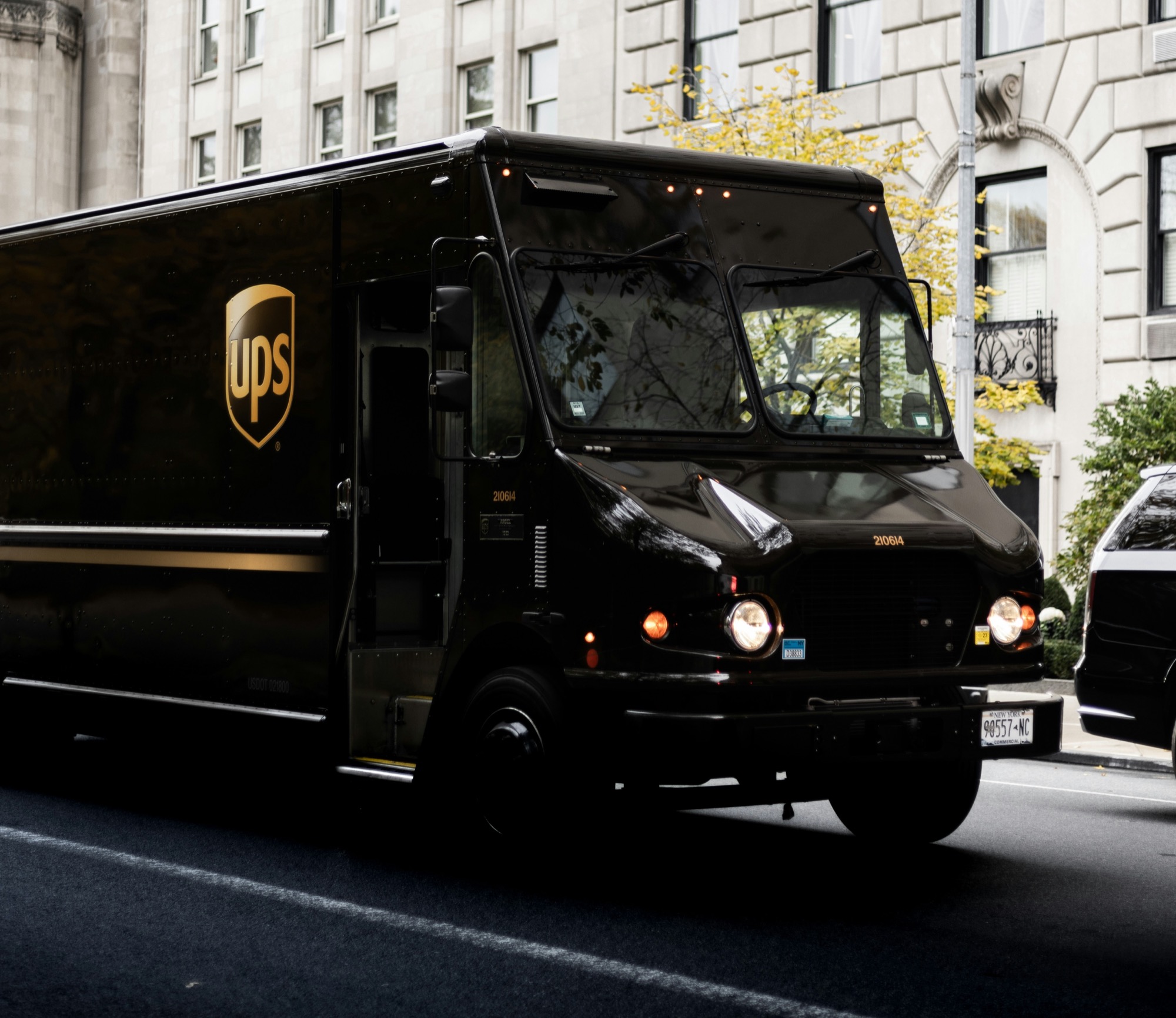


UPS shipping estimate

Get an Instant UPS Shipping Estimate

UPS publishes its rates in a public Rate & Service Guide, but working out your real cost means reading zone charts, applying the dimensional-weight formula, and adding surcharges by hand. Secureship does it instantly: enter your package details once and see live UPS rates alongside FedEx, DHL, Canada Post, and every other major carrier on a single screen.

No UPS account is required to compare rates. If you already have one, Secureship can show your negotiated UPS rates alongside every other carrier, or you can use Secureship's own group rates instead.

30 sec to get a quote
Live UPS rates, not list prices
No account needed to compare
Get an Instant UPS Estimate

Enter your package details and see live UPS rates alongside every other major Canadian carrier.

Get Estimate

Package Type
Units
UPS pricing

How UPS Pricing Works

Every UPS quote comes down to one formula: billable weight + zone + service level + surcharges = total price. The base of that formula is driven by three things:

  • Billable weight: the greater of actual or dimensional weight (see below).
  • Origin-to-destination zone: UPS publishes zone charts per origin postal code.
  • Service level: from a scheduled UPS Standard shipment up to a guaranteed 9:00 a.m. Express Early delivery.

Surcharges, such as fuel and any active demand fees, are added on top. Because UPS's zone charts are published per origin rather than as a single table, check your exact lane and get a live figure with UPS's Calculate Time and Cost tool, or see it alongside every other carrier in Secureship's calculator.

Source: 2026 UPS Canada Rate & Service Guide

UPS dimensional weight

Dimensional (Volumetric) Weight

UPS charges whichever is greater: actual weight or dimensional weight. This is the factor that most often surprises shippers, since a large but light box can cost far more than the scale suggests. The divisor also depends on the service, not just the unit of measurement.

Dimensional Weight (Cubing)

UPS bills the greater of actual weight or dimensional (volumetric) weight. Measure each dimension at its longest point, round up to the next whole number, then multiply length × width × height. Which divisor applies depends on the service you pick:

Domestic air (Express Early, Express, Express Saver, Expedited) ÷ 115 in / ÷ 4,100 cm
UPS Standard & Worldwide services ÷ 139 in / ÷ 5,000 cm
📦 Example: A 30 × 25 × 20 cm box = 15,000 cm³. Shipped on UPS Standard or a Worldwide service, dimensional weight = 15,000 ÷ 5,000 = 3 kg. Shipped on a domestic air service, the same box = 15,000 ÷ 4,100 = 3.66 kg, the higher figure you would be billed.

Secureship's calculator applies the correct divisor automatically for the service you pick, so the billable weight you see is the one you pay.

Source: 2026 UPS Canada Rate & Service Guide

UPS large package

Large Package Minimum Weight

One of the most overlooked line items on an oversized domestic shipment: a package becomes a Large Package once length plus girth exceeds 130 in (330 cm), or for domestic shipments once length alone exceeds 96 in (244 cm). Once that threshold is crossed, UPS bills a minimum weight of 90 lb (41 kg), no matter what the package actually weighs.

A Large Package Surcharge and an Additional Handling fee are never both charged on the same package, the Large Package rule takes priority. See our UPS Surcharges guide for the full surcharge picture.

Source: 2026 UPS Canada Rate & Service Guide

UPS surcharges

Surcharges, Fuel, and Demand Fees

The base rate is only part of what you pay. UPS adds surcharges where a shipment needs extra handling, ships to a residential or remote address, or moves during a demand period, plus the fuel surcharge on nearly every shipment. Our UPS Surcharges & Fees guide breaks down every published charge.

The Fuel Surcharge

Weekly fuel surcharge adjustment
% of base how the surcharge applies
Live current rate on UPS's site

UPS reserves the right to apply a fuel surcharge for such periods as it determines necessary, with current details posted on ups.com. No fixed percentage appears in the rate guide or the terms, because the surcharge is index-based and adjusts weekly. Rather than print a figure that goes stale, check the current rate on UPS Canada's fuel surcharge page. When you quote through Secureship, the applicable surcharge is already built into the rate you see.

Demand and Surge Fees

UPS also applies date-bounded Demand and Surge fees during periods of high volume, on top of base rates and on top of the fuel surcharge. These windows expire and change, so check UPS's current Demand and Surge Emergency Fees notice before budgeting a shipment during peak season.

Sources: 2026 UPS Canada Rate & Service Guide, UPS Canada, current fuel surcharge

Save on UPS rates

How to Save on UPS Shipping Rates

There is a real gap between what you pay at list price and what you pay with the right approach. These tips are grounded in how UPS's pricing actually works.

📊
1. Compare Carriers on Every Shipment
UPS is strong on many domestic and international routes, but not every one. Compare your exact shipment against other carriers on Secureship and pick the best rate each time.
📦
2. Right-Size Your Packaging
The domestic air divisor (115 in / 4,100 cm) is more punitive than most shippers expect. Because UPS bills the greater of actual or dimensional weight, every unnecessary centimetre of box space adds cost through the dimensional weight formula.
📐
3. Watch the Large Package Threshold
Cross 108 in in length or the length-plus-girth threshold and your package is billed at a 90 lb (41 kg) minimum, regardless of actual weight. Keep dimensions under the threshold when you can.
🧾
4. Ship Worldwide Express for Free Entry Preparation
Entry preparation is free on UPS's Worldwide Express family, but carries a tiered fee on shipments arriving via UPS Standard or other couriers. See our UPS Customs & Duties guide for the full fee scale.
🔑
5. Use Group Rates (No Account Needed)
Secureship aggregates volume across thousands of businesses to negotiate rates a single small shipper cannot get alone. No UPS account, no minimum volume, no sunset clause.
See How Much You Can Save

Enter your shipment details and compare live UPS rates against every major carrier. Takes 30 seconds, no account required.

Compare UPS Rates Now

More UPS Guides

UPS shipping in Canada

UPS Guide
Shipping in Canada

Complete guide to UPS services, rates, customs, tracking, and how to save on every shipment.

Read more
UPS customs and duties

UPS Guide
Customs & Duties

How UPS duties, taxes, and brokerage charges work, and how to estimate them before you ship.

Read more
UPS delivery times

UPS Guide
Delivery Times

UPS transit times, Saturday delivery, and how long domestic and international shipments take.

Read more
UPS services

UPS Guide
Services Overview

UPS Express, Express Saver, Standard, and Worldwide Expedited compared, with weight limits.

Read more
UPS surcharges and fees

UPS Guide
Surcharges & Fees

Fuel, residential, and address correction surcharges explained, with current UPS amounts.

Read more
UPS shipping alternatives

UPS Guide
Alternatives

When UPS is the right call, and when another carrier fits your route better.

Read more
UPS vs FedEx

UPS vs
FedEx

Rates and delivery windows head to head, including the Saturday delivery gap.

Read more
UPS vs DHL

UPS vs
DHL

Two global networks compared, so you can pick the right one for your shipment.

Read more
UPS vs Canada Post

UPS vs
Canada Post

Domestic rates and coverage compared between UPS and Canada Post.

Read more

Frequently Asked Questions About UPS Rates

How much does UPS shipping cost?

There is no single price. A UPS rate is built from billable weight (the greater of actual or dimensional weight), the origin-to-destination zone, and the service level, plus any applicable surcharges such as fuel. The fastest way to see your real cost is to enter your shipment in Secureship's calculator, which shows live UPS rates next to every other major carrier.


How does UPS calculate shipping rates?

UPS prices each shipment as billable weight + zone + service level + surcharges. Billable weight is the greater of actual or dimensional weight, using a 115 in / 4,100 cm divisor on domestic air services or 139 in / 5,000 cm on UPS Standard and the Worldwide services. Zone charts are published per origin postal code. UPS's own Calculate Time and Cost tool gives a lane-specific figure.


Does UPS charge by size or weight?

Both. UPS bills the greater of actual or dimensional weight. Dimensional weight is length × width × height ÷ 115 (in) or ÷ 4,100 (cm) for domestic air services, and ÷ 139 (in) or ÷ 5,000 (cm) for UPS Standard and the Worldwide services, so a large but light box can cost more than the scale suggests. Right-sizing your packaging keeps the billable weight down.


What is the UPS Large Package minimum billable weight?

A package is a UPS Large Package when length plus girth exceeds 130 in / 330 cm, or when length alone exceeds 96 in / 244 cm for domestic shipments. Large Packages carry a minimum billable weight of 90 lb (41 kg) regardless of actual weight, and do not also incur an Additional Handling fee. It is one of the most overlooked line items on an oversized domestic shipment.


How much is the UPS fuel surcharge?

UPS adds a fuel surcharge on top of base rates and on top of any Demand or Surge fees, adjusted weekly per UPS's terms of service. Because the rate changes often, we do not print a fixed figure here. Check the current percentage on UPS Canada's fuel surcharge page, or quote through Secureship, where applicable surcharges are built into the rate you see.


How can I get cheaper UPS rates?

Every published UPS amount is a daily/list rate. Secureship aggregates volume from thousands of businesses to negotiate group rates, so even low-volume shippers pay less than the list price, with no UPS account required. Right-sizing packaging, matching the service to your deadline, and shipping on UPS's Worldwide Express family to get free customs entry preparation also help. See our UPS Customs & Duties guide for the entry-preparation fee scale.